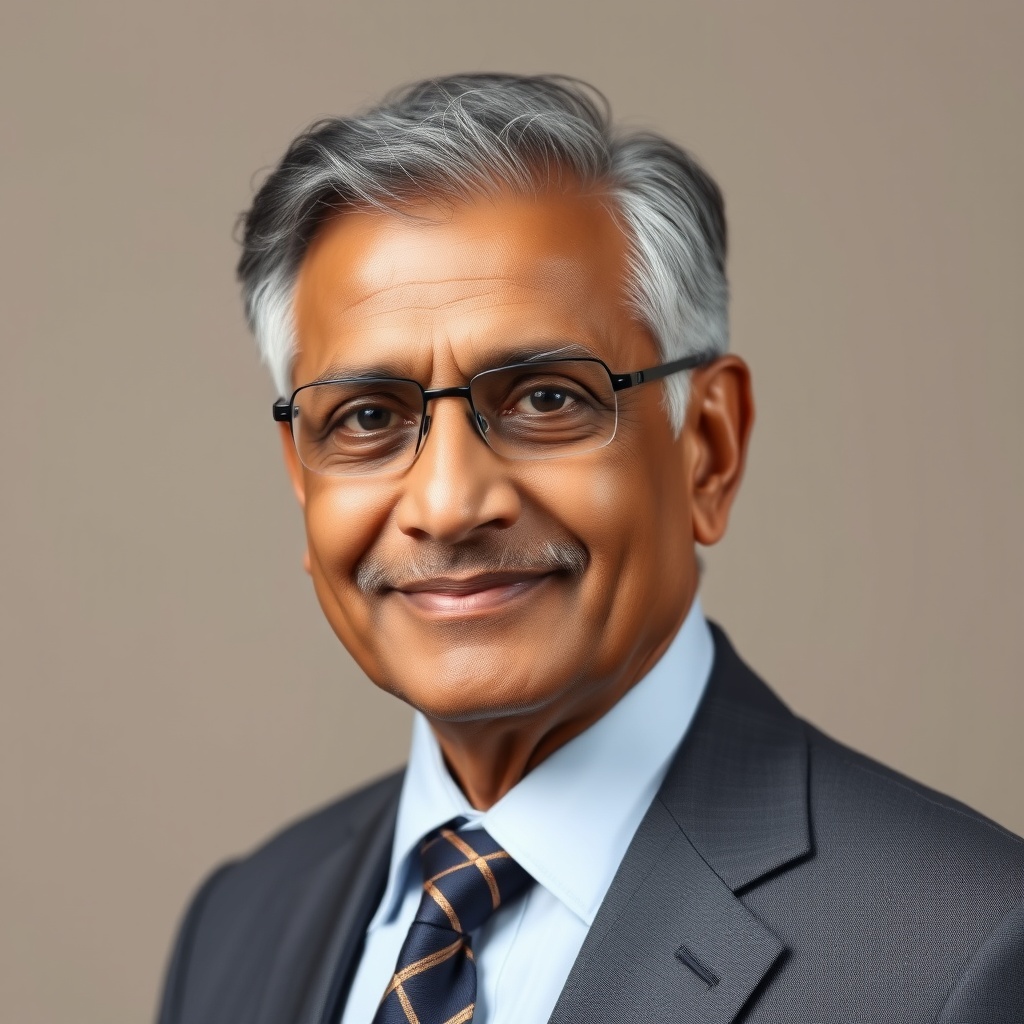
There is a particular kind of judge who doesn't merely interpret the law but reshapes the landscape it governs. Justice Surya Kant — now the 53rd Chief Justice of India — is that judge. His is not a story of privilege finding its natural station. It is the story of a Sanskrit teacher's son from Petwar, Haryana, who walked into the Punjab & Haryana High Court as a young advocate in 1983 and, over four decades, left his fingerprints on some of the most consequential legal questions this republic has confronted.
To understand what Chief Justice Surya Kant brings to the apex court, you must first understand the 14 years he spent transforming jurisprudence at the High Court level — 10,215 judgments and 4,323 orders that built, brick by careful brick, the judicial philosophy he now applies to the Constitution itself.
The Youngest Advocate General
Before the bench, there was the bar. Justice Surya Kant practised as an advocate for seventeen years at the Punjab & Haryana High Court, earning a reputation for precision in constitutional and civil matters. In 2000, at the age of 38, he was appointed the youngest Advocate General of Haryana — a position that placed him at the intersection of state power and individual rights, a tension that would define his judicial career.
Four years later, in January 2004, he was elevated to the bench. What followed was not a quiet judicial tenure. It was a masterclass in how a High Court judge can shape the law from the ground up.
The PHHC Years: Building the Foundation (2004–2018)
Think of a High Court judge's work as the foundation of a building. The Supreme Court gets the headlines, but the High Court lays the concrete. Justice Surya Kant poured more concrete than most — 10,215 judgments across fourteen years, spanning land acquisition, constitutional rights, criminal law, arbitration, taxation, and administrative law.
Three themes emerge from this staggering body of work.
The Prisoners' Rights Revolution
In Jasvir Singh v. State of Punjab (CWP/5429/2010), Justice Surya Kant delivered what may be his most humane High Court judgment. The question was deceptively simple: do prisoners retain the right to family life? His answer was unequivocal. Prisoners retain fundamental rights under Article 21, he held, including the right to life and personal liberty — these are curtailed only to the extent necessitated by incarceration, not extinguished by it. He directed the State of Punjab to establish a Jail Reforms Committee and create a scheme enabling conjugal and family visits.
This wasn't judicial activism for its own sake. It was the application of a clear principle: incarceration is the punishment. Everything beyond that requires constitutional justification. The reasoning has the precision of a mathematical proof — if the right exists under Article 21, and incarceration doesn't extinguish it, then the state must affirmatively enable what remains.
The Land Acquisition Architect
No area of law occupied more of Justice Surya Kant's PHHC docket than land acquisition — and no area demanded more careful balancing of competing interests. Haryana and Punjab, in the grip of rapid urbanisation, generated thousands of acquisition disputes. His approach was neither reflexively pro-state nor reflexively pro-landowner. It was principled.
In Vivek Cooperative House Building Society v. State of Haryana (CWP/9718/2009), he held that the consideration of Section 5-A objections under the Land Acquisition Act is valid if reasoned, even if debatable. The state's power to acquire land for public purpose was upheld — but with a critical safeguard: the reasoning must be genuine, not perfunctory. This single principle, applied across hundreds of cases, became the lodestar for land acquisition jurisprudence in the region.
In Brahm Dev v. State of Haryana (CWP/5863/2013), he upheld the acquisition of land for an Industrial Model Township as valid public purpose, aligning it with the state's economic development goals — but simultaneously granted specific reliefs for existing industrial units on the acquired land. Development, yes. Steamrolling existing livelihoods, no.
And in Duli Chand v. State of Haryana (CWP/19171/2011), he rejected the argument that acquisition for urban development was a colourable exercise of power simply because a licensed private coloniser owned part of the land. The test, he clarified, was the genuineness of public purpose — not the identity of incidental beneficiaries.
The Guardian of Institutional Integrity
Perhaps most telling was his approach to cases involving the judiciary itself. In Jatinder Pal Singh v. State (CWP/15869/2012), a judicial officer had received the devastating remark "integrity doubtful" in his Annual Confidential Report. Justice Surya Kant expunged it, holding that adverse remarks casting doubt on a judicial officer's integrity cannot be sustained without direct or indirect material evidence. The principle is elegant in its simplicity: the higher the allegation, the higher the evidentiary threshold.
In Monika Goyal v. State of Punjab (CWP/2822/2017), he intervened in a recruitment examination controversy, holding that a Writ Court can examine the correctness of an objective answer key when it is demonstrably wrong. The education system's integrity, he reasoned, cannot be subordinated to the administrative convenience of finality.
The Supreme Court: Constitutional Architecture (2019–2025)
When Justice Surya Kant was elevated to the Supreme Court in May 2019, he brought with him something rare: a judge who had personally decided over ten thousand cases. That volume of experience — of seeing how legal principles interact with human lives — is irreplaceable.
His Supreme Court tenure before becoming CJI produced landmark decisions across constitutional law, insolvency, taxation, arbitration, and civil liberties. In six years, he participated in over 14,000 hearings — a pace that speaks to both stamina and judicial commitment.
The Constitutional Bench Work
In In Re: Article 370 of the Constitution (2023 INSC 1058), Justice Surya Kant sat on the bench that upheld the abrogation of Article 370. The court held that Article 370 was a temporary provision, and that the President's power under Article 370(3) to declare it inoperative did not cease with the dissolution of the Jammu & Kashmir Constituent Assembly. Whatever one's view of the political question, the legal reasoning was architecturally sound — the provision contained the seed of its own sunset.
In In Re: Section 6A of the Citizenship Act (2024 INSC 789), the bench upheld the constitutional validity of the provision by a 4:1 majority, affirming Parliament's legislative competence under Article 11 to enact citizenship provisions specific to Assam's unique historical circumstances. The judgment navigated the treacherous waters between national sovereignty and regional identity with characteristic precision.
Reshaping Economic Law
Two judgments reshaped the architecture of India's economic governance. In Union of India v. Mohit Minerals (2022 INSC 596), the court held that GST Council recommendations are not binding on the Union and States but recommendatory in nature — a landmark articulation of cooperative federalism in the taxation sphere. The reasoning cut through the political noise with mathematical clarity: the Constitution creates a council, not a command structure.
In Committee of Creditors of Essar Steel India (2019 INSC 1256), one of the earliest and most significant insolvency cases, the court upheld the primacy of the Committee of Creditors' commercial wisdom. Judicial interference, the bench held, does not extend to the merits of a resolution plan. This single principle — that courts interpret the law but do not run businesses — became the backbone of India's insolvency framework.
The Arbitration Reformer
Justice Surya Kant authored or participated in a trilogy of arbitration decisions that fundamentally clarified the law. In In Re: Interplay Between Arbitration Agreements (2023 INSC 1066), the court overruled previous judgments, holding that unstamped or insufficiently stamped arbitration agreements are inadmissible in evidence under the Stamp Act — but critically, they are not void or unenforceable. The distinction is everything: form does not defeat substance.
In ONGC v. Afcons Gunanusa (2022 INSC 884), the court held that arbitrators cannot unilaterally determine their own fees, as this violates party autonomy and the principle against being a judge in one's own cause. Simple. Elegant. Unanswerable.
Rights and Humanity
The thread of human rights that ran through his PHHC years continued at the Supreme Court. In Ravinder Kumar Dhariwal v. Union of India (2021 INSC 916), the court held that disciplinary proceedings against an employee with a mental disability must be determined under the Rights of Persons with Disabilities Act, 2016. The judgment was a quiet revolution — it said, in effect, that disability law is not a carve-out from employment law but a lens through which all employment decisions must be viewed.
In Citizens for Green Doon v. Union of India (2021 INSC 885), the court balanced environmental protection against national security, allowing strategic border highway development at a double-lane paved shoulder standard. The reasoning was proportionality in its purest form: the need for defence infrastructure, measured against the environmental cost, with the scale calibrated to necessity rather than convenience.
The 53rd Chief Justice: A Vision Taking Shape
When Justice Surya Kant assumed office as the 53rd Chief Justice of India in November 2025, he brought to the position something the institution desperately needed: a judge who has seen the law from every angle. As an advocate for seventeen years, as the youngest Advocate General of a major state, as a High Court judge for fourteen years, as Chief Justice of a High Court, and as a Supreme Court judge for six years — there is no vantage point in the Indian legal system he has not occupied.
His early months as CJI have signalled a continuation of the themes that defined his career: institutional reform, access to justice, and the insistence that constitutional principles must be lived, not merely cited. The court under his leadership has maintained an aggressive listing pace, with constitutional bench matters receiving priority attention.
The Numbers Tell the Story
Judicial legacies are sometimes best understood through scale. Justice Surya Kant delivered 10,215 judgments at the Punjab & Haryana High Court. He participated in over 14,037 hearings at the Supreme Court. At the apex court alone, his benches disposed of 9,153 cases, dismissed 2,775, allowed 865, partly allowed 449, and remanded 122. These are not abstract numbers. Each represents a dispute resolved, a right adjudicated, a precedent established.
Across this vast body of work, the outcome distribution reveals a judge who is neither reflexively permissive nor reflexively restrictive. He allows when the law demands it, dismisses when the facts compel it, and disposes with pragmatic directions when rigid outcomes would serve no one.
Looking Forward
The Chief Justice of India occupies a unique constitutional position — simultaneously head of the judiciary, master of the roster, and the final arbiter in matters that shape the republic. Justice Surya Kant brings to this role a judicial philosophy forged across two decades on the bench: that the Constitution is not a document to be worshipped from a distance but a living instrument to be applied with rigour, empathy, and an unflinching commitment to first principles.
From a Sanskrit teacher's modest home in Petwar to the highest judicial office in the world's largest democracy — the arc of Justice Surya Kant's career is, in itself, a testament to the constitutional values he now stewards. The law, at its best, is a ladder. And the 53rd Chief Justice of India has spent forty years proving that the rungs hold.