
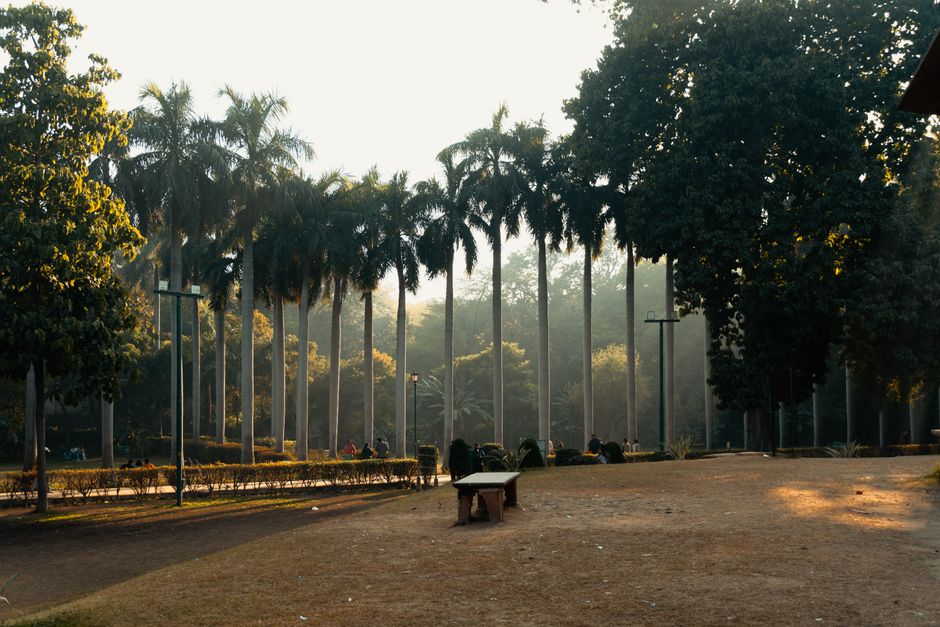
In a ruling delivered on 13 November 2026, the Delhi High Court has refused to permit Chhath Puja celebrations at Chintoo Park in Naraina Village, New Delhi, holding that a park maintained as a green area cannot be opened for religious events merely because a group has used it for years. The decision affects every resident who relies on public parks as green spaces — and every organiser who assumes long tradition creates a right.
What the Court Decided
Justice Jasmeet Singh was hearing an application filed by Lalit Anand under Section 151 of the Code of Civil Procedure, 1908. Anand sought permission to hold Sandhya Arghya (evening offerings) on 15 November 2026 and Usha Arghya (morning offerings) on 16 November 2026, on a portion of Chintoo Park not exceeding 1,000 square metres. He said he had organised the event there for 23 years and promised to restore the park afterwards.
The Delhi Development Authority (DDA), which maintains the park, opposed the plea. Its counsel argued that the park is a green area with planted trees and flowers, and that allowing the event would harm its upkeep.
The Court agreed with the DDA. “The fact that the applicant has been organising the Chhath Puja at the said location for several years, or that the present request is confined to a limited area and period, cannot, by itself, constitute a ground for permitting the use of a green area,” Justice Singh wrote. “The park is being maintained as a green area at the present for the benefit of the public at large.”
The application was dismissed. The ruling is a clear statement that long practice does not create a legal right to use protected public land.
Circular Cannot Override Court Order
Anand also pointed to a document titled “Chhath Puja 2026: Single Window Management, Central District,” apparently issued by the Delhi government. The Court refused to give it any weight. The document, the judge said, “cannot be read or construed as superseding the directions already issued by this Court on 19.08.2026.”
Justice Singh relied on the Supreme Court’s decision in S.S. Bola v. B.D. Sardana, (1997) 8 SCC 522, which held that the legislature has no power to overrule a constitutional court’s decision by mere declaration. The Court quoted the judgment: “The legislature has no power to overrule the decision of a constitutional court by mere declaration, without properly and constitutionally removing the base upon which the previous decision was founded.”
In plain terms: an administrative circular or government notification cannot dilute a judicial order. This principle matters far beyond this case. It reaffirms that court directions bind the executive, and that officials cannot sidestep them through paperwork. For ordinary people, it means a court order protects them even when a government office issues a contrary instruction.
Alternative Arrangements Already Exist
The Court noted that the Government of NCT of Delhi had already earmarked an area at Munak Canal for Chhath Puja and made arrangements there. “In view of the availability of alternative arrangements for conducting Chhath Puja, there is no justification for permitting the use of Chintoo Park for the proposed purpose, particularly when the same is being maintained as a green area,” the order states.
That reasoning gives the judgment practical weight. The Court is not banning the festival; it is saying that when a suitable alternative exists, there is no need to sacrifice a green space.
Why This Matters for Families and Communities
Chhath Puja is a deeply felt observance for millions in Delhi and across northern India. Denying a 23-year tradition at a familiar spot will disappoint many. But the judgment draws a line that benefits the wider public: green areas are held in trust for everyone, and their protection cannot depend on who asks loudest or how long they have been asking.
For community organisers, the lesson is straightforward: apply for designated sites early. The government has set aside space at Munak Canal. Using it avoids the risk of a last-minute court setback.
For residents, the ruling is a reminder that parks are not empty stages for private events. They are public assets with legal protection. That protection held on 13 November 2026, in W.P.(C) 36/2026, before Justice Jasmeet Singh.
Read more on Delhi High Court rulings on public green spaces and permissions for religious events on public land.